
A Sri Lankan court has ordered the continued detention of the former head of the state intelligence service in connection with the 2019 Easter Sunday bombings that killed nearly 270 people.

Kin of 2019 Easter Sunday attack victims in Sri Lanka protested against alleged opposition attempts to obstruct ongoing investigations. The protests follow the arrest of former intelligence chief Suresh Sallay and accusations of political conspiracy related to the attacks. The current government has reopened the probe, citing past political interference.
Sri Lanka commemorated the 7th anniversary of the Easter blasts, with Archbishop of Colombo Malcolm Cardinal Ranjith urging authorities to investigate individuals directly or indirectly involved in the deadly attacks, irrespective of their status.

A Sri Lankan court has imposed an overseas travel ban on former president Gotabaya Rajapaksa and two former military officers in connection with ongoing investigations into the 2019 Easter Sunday attacks. The ban was issued after the Criminal Investigation Department (CID) raised concerns that their flight could hamper the probe into the coordinated suicide bombings that killed 270 people. The current government reopened the investigation in late 2024, alleging political influence led to an earlier cover-up.

Meanwhile, a three-member committee appointed to probe the attacks that killed 258 people, including 11 Indians, on Monday submitted its final report to President Maithripala Sirisena.
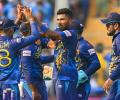
Suresh Sallay, former intelligence chief, has been ordered to appear in a Sri Lankan court next month as the third suspect in the 2019 Easter Sunday attacks probe. He is currently detained under the Prevention of Terrorism Act.

Sri Lanka's response to the Easter attacks has been slow and politically contested, unlike India's swift institutional reforms after the 2008 Mumbai terror attacks, observes Colonel R Hariharan (retd).

The details of the attackers and their relatives linked to the bombings was released by the police on Wednesday.
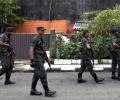
The NIA had alerted the island nation that ISIS terrorists were planning to carry out strikes there.
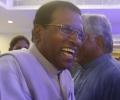
A Sri Lankan court on Friday named former president Maithripala Sirisena as a suspect in the 2019 Easter bombings in which 270 people, including 11 Indians, were killed.

A man, one of the six accused in the explosion case in Coimbatore, confessed during interrogation that he met two men in a Kerala prison who had links with an ISIS group involved in the Easter bombings in Sri Lanka, police sources said on Friday.
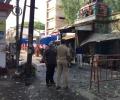
The decision came after Tamil Nadu Chief Minister MK Stalin recommended an investigation by the National Investigation Agency into the Sunday blast in which an engineer was killed.

National flags were lowered and people bowed their heads as the silence began at 8:30 am local time, the time the first of the attacks occurred on Sunday.

Forty suspects, including the driver of a van allegedly used by the suicide bombers, have been arrested in connection with the attacks which shook Sri Lanka.
A police release in Coimbatore said a case has been registered in the Ukkadam police station over the incident.

Even as the polity find ways and means to address the genuine concerns and fears of the society, the Sri Lankan State apparatus would have to unravel these mystery-questions with convincing answers, and a road-map to the future, says N Sathiya Moorthy.

The attorney general instructed the authorities to charge them for their failure to prevent the Easter terror attacks.

The perpetrators of the killing of a pharmacist in Maharashtra's Amravati might have been 'self inspired' by the violence carried out by the dreaded Middle East group Islamic State (ISIS) and the investigators are trying to ascertain if they have links with any terror outfit, officials said.

While 10 persons from Karnataka have been confirmed dead, at least seven of them are said to be JD-S workers.

The input was sent through diplomatic channels to the island nation after a through investigation pertaining to the IS case in Coimbatore was carried out by the NIA.
